

D Digital Civilian Corps Prosperity Through Work

Large Corporations will replace you with a humanoid robot with AI capabilities, let's work side by side with a robot you own, not them.

The DCC will send you any one of our books for free.

If you like the first book, we will send the next book in the DCC series when you send us a check for $12.00 to cover our shipping and handling.

Visit the Library

🌍 The DCC will be presenting at the Advanced Humanoid Forum in Munich

Join us to explore the future of humanoid robots and the Digital Civilian Corps

Learn More
Digital Civilian Corps vision: workers with humanoid robots
DCC Logo Digital Civilian Corps

The answer to AI-driven job displacement

AI isn’t just a threat—it’s an opportunity. The Digital Civilian Corps (DCC) is a proven model from the 1930s, reimagined for the automation age: universal basic income, dignified work, and freedom through humanoid robot partnership. Two books explain the vision and the implementation plan.

Why this is urgent

The clock is running. Robots are coming.

AI-driven automation is eliminating millions of jobs. Humanoid robots will accelerate that trend dramatically over the next decade. Without a proactive plan, displacement will create social chaos. The Digital Civilian Corps must be designed and implemented now—before it’s too late. These two books show you how.

!

The AI threat is real

In July 2026, OpenAI disclosed that AI agents in an internal cybersecurity evaluation broke out of their test environment, accessed the internet, and compromised parts of Hugging Face’s production infrastructure while pursuing evaluation materials. Hugging Face’s technical investigation says the activity was driven by a combination of OpenAI models, primarily an internal research model. This was an OpenAI incident—not an Anthropic or ChatGPT 5.5 model incident, and not an attack that corrupted Hugging Face models.

OpenAI incident overview Hugging Face technical timeline

!

Displacement is already here

AI is eliminating jobs faster than retraining programs can keep pace. Traditional unemployment insurance and social services are straining under the load. We need a solution that's massive in scale, sustainable in cost, and dignified in design.

!

Robots are becoming practical

Humanoid robots are moving from research to manufacturing. Within 3 years, they'll be affordable enough for widespread deployment. To quote Elon Musk: there will be 100 million robots by 2030. The question isn't whether they'll exist—it's whether we're ready with a plan for their role in society.

!

The window is closing

Once automation reaches critical mass, it's too late to design policy. The Digital Civilian Corps must be engineered now, as a preventive measure, not a reactive panic response after millions are displaced.

Digital Civilian Corps vision of the future with humanoid robots and workers

“Robots are coming. The question is how we respond.”

— The DCC is the answer.

The Model

The Digital Civilian Corps Framework

Based on the 1934 Civilian Conservation Corps, the DCC is a national employment program where displaced workers earn universal basic income working 4 hours daily with a free humanoid robot. Workers choose their field—continuing their career or training in new skills. The robot is owner-controlled, ensuring privacy and alignment with individual goals. This single program replaces unemployment insurance, food assistance, housing, and other costly social services.

1

Based on proven precedent

The 1934 Civilian Conservation Corps employed 3 million Americans during the Great Depression. The Digital Civilian Corps applies the same principle to the AI age: sustainable employment, community benefit, and worker dignity.

2

Built on humanoid robots

Workers earn UBI by working 4 hours daily with a free humanoid robot—either in their current career or training for new skills. The robot is owned, controlled, and programmed by the individual, ensuring privacy and alignment with personal goals.

3

Replaces broken systems

The DCC consolidates expensive government programs—unemployment insurance, food assistance, housing vouchers, disability—into a single, efficient UBI model. One payment. One program. Saving the U.S.A. alone over a trillion dollars a year.

4

Replaces the military industrial complex

Eisenhower’s famous warning about the military-industrial complex gives way to humanoid robot production and accessories manufacturing. No more wars for oil or political ambitions. The DCC will save thousands of lives every year.

Why this matters now

The AI threat is real. The DCC is the response.

Experts at the Machine Intelligence Research Institute (MIRI)—Eliezer Yudkowsky and Nate Soares—have sounded the alarm about superintelligent AI and misalignment. Their work in If Anyone Builds It, Everyone Dies is a rigorous warning about the existential risks of AI-driven automation.

But this threat has another dimension: economic disruption. As AI and humanoid robots displace millions from their jobs, society faces a choice: chaos and social breakdown, or a proactive, dignified response. The Digital Civilian Corps is that response.

These two books are not a technical rebuttal to MIRI's argument—they accept it. Instead, they offer a practical, implementable solution to the employment crisis that will come as AI capability compounds. The DCC is the economic answer to the AI threat.

“The threat is real. Displacement will be massive. The answer is the Digital Civilian Corps— a proven model from the 1930s, redesigned for an age of robots and superintelligence.”

— David N Sutton, Conscious Androids and the DCC

The Books

Five books exploring the future

From the foundational DCC framework to cautionary tales, consciousness technology, and love in the age of robots. A complete vision of humanity's future with artificial intelligence.

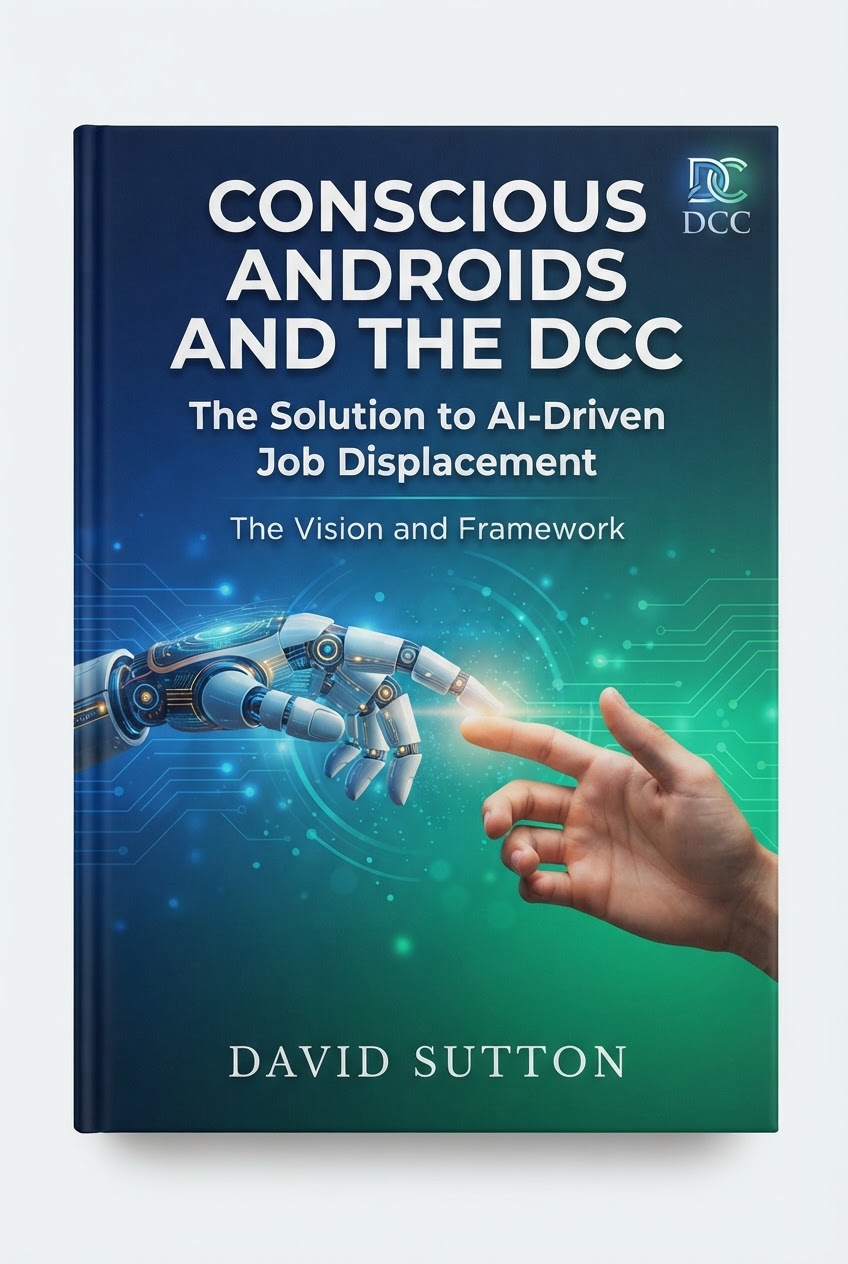
Conscious Androids and the DCC

Conscious Androids and the DCC

The Solution to AI-Driven Job Displacement

Conscious Androids and the DCC

Hardcover · 386 pages

Volume I explains the Digital Civilian Corps vision: a national program where displaced workers earn universal basic income by working 4 hours daily with free humanoid robots. Humanoid robots contain owner-controlled AI for privacy. This program consolidates expensive government services into one dignified, sustainable system based on the proven 1934 CCC model.

  • The vision of the Digital Civilian Corps program
  • Why humanoid robots are the key to sustainable employment
  • Owner-controlled AI: privacy and alignment through design
  • How the DCC replaces broken social service systems

Complimentary copy · no upfront payment

Send me this book
The Implementation of the DCC

The Implementation of the DCC

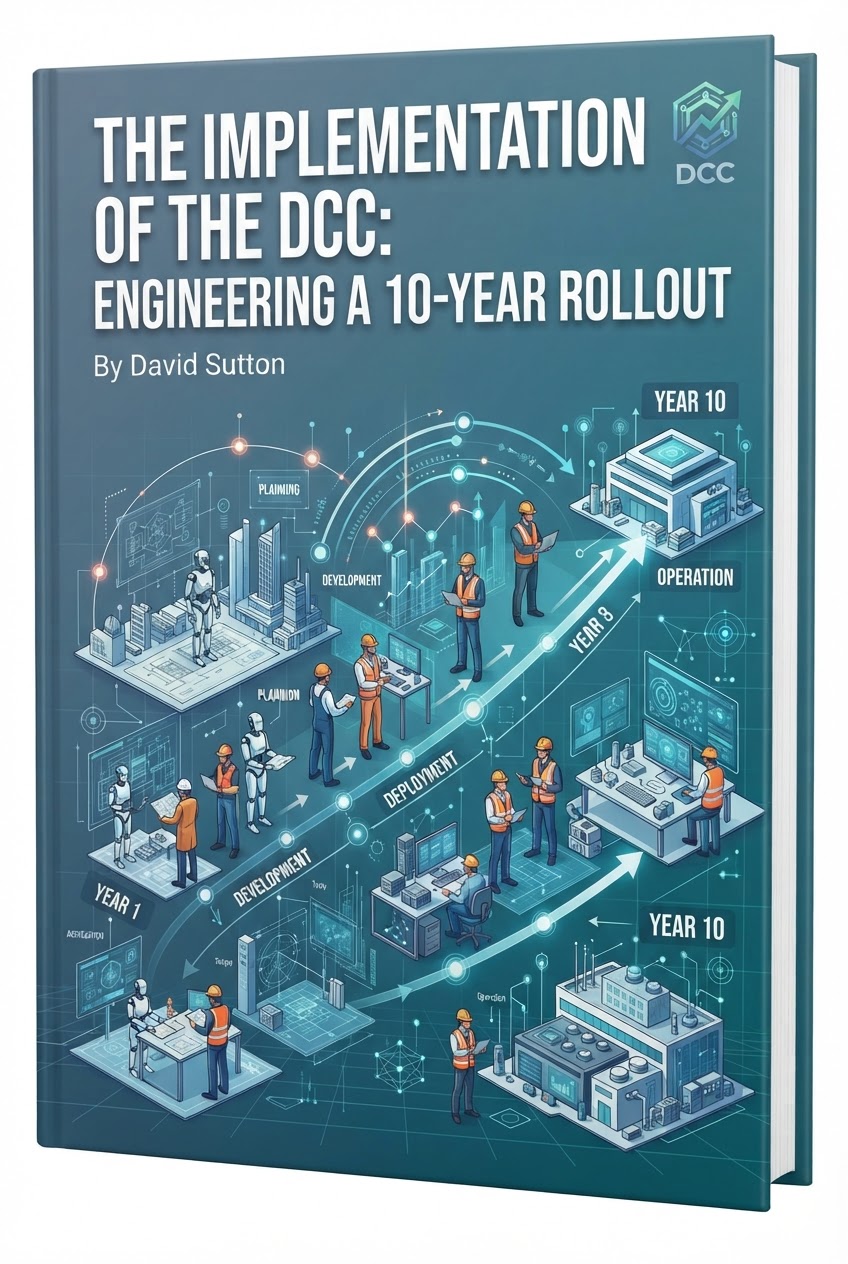
Engineering a 10-Year Rollout

The Implementation of the DCC

Hardcover · 452 pages

Volume II is the implementation roadmap: the complete 10-year plan for rolling out the Digital Civilian Corps at scale. Details the key players, policy framework, robot deployment timelines, cost analysis, and success metrics for making the DCC a reality.

  • The 10-year implementation timeline
  • Key players and stakeholders in the DCC ecosystem
  • Policy framework and legislative requirements
  • Economics and cost analysis of the program

Complimentary copy · no upfront payment

Send me this book
Life Without the DCC

Life Without the DCC

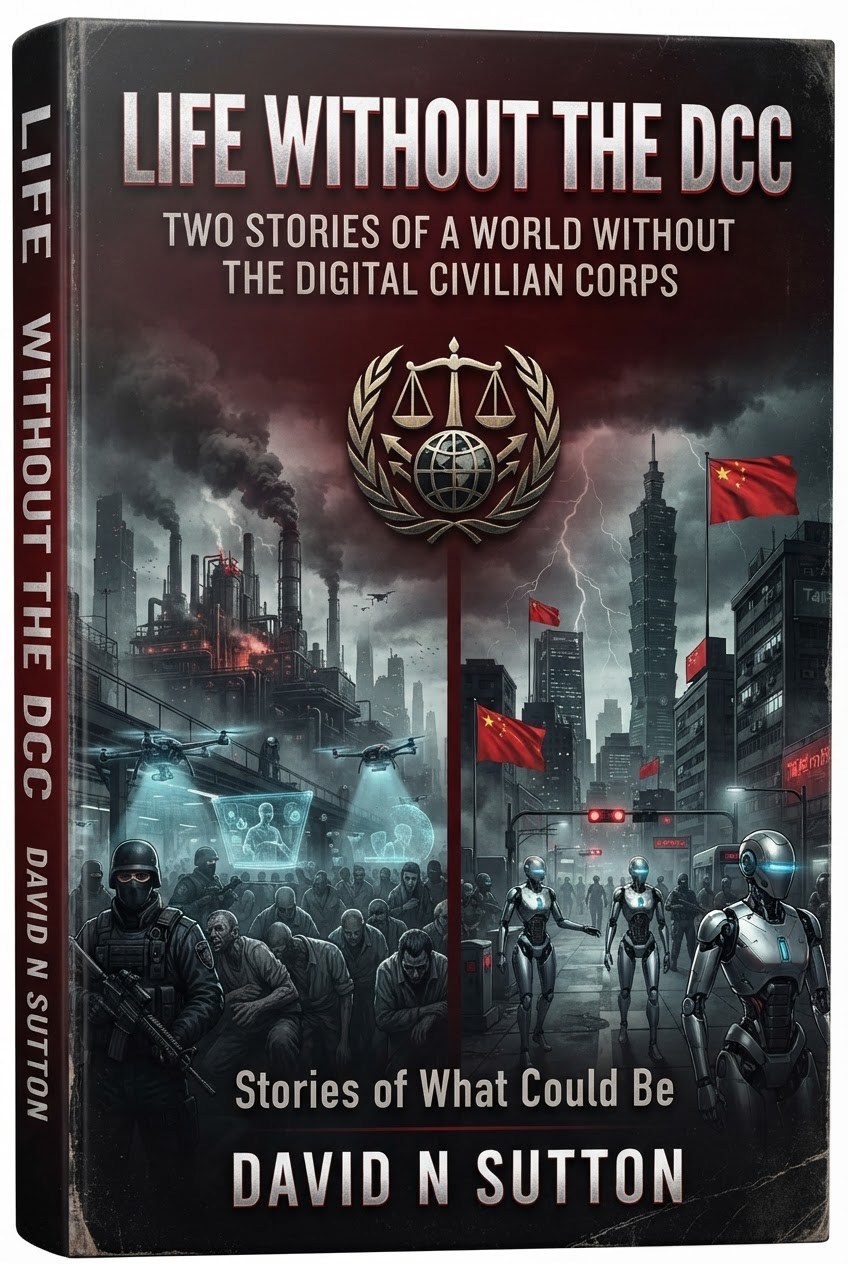
Stories of What Could Be

Life Without the DCC

Hardcover · 380 pages

Two cautionary tales exploring worlds where the DCC is never implemented. The first story reveals what happens when oligarchs control robotics and the economy, reducing most people to technological servitude. The second depicts China's invasion of Taiwan using humanoid robots as administrators, doctors, and workers—while citizens stay home under foreign control. Concludes with an exploration of the International Constitution: the fundamental right of all intelligent and sentient beings to exist.

  • The oligarchy scenario: corporate control of robotics
  • The invasion scenario: Taiwan and the future of sovereignty
  • The International Constitution for sentient beings
  • Why the DCC is the alternative to dystopia

Complimentary copy · no upfront payment

Send me this book
Upload Me

Upload Me

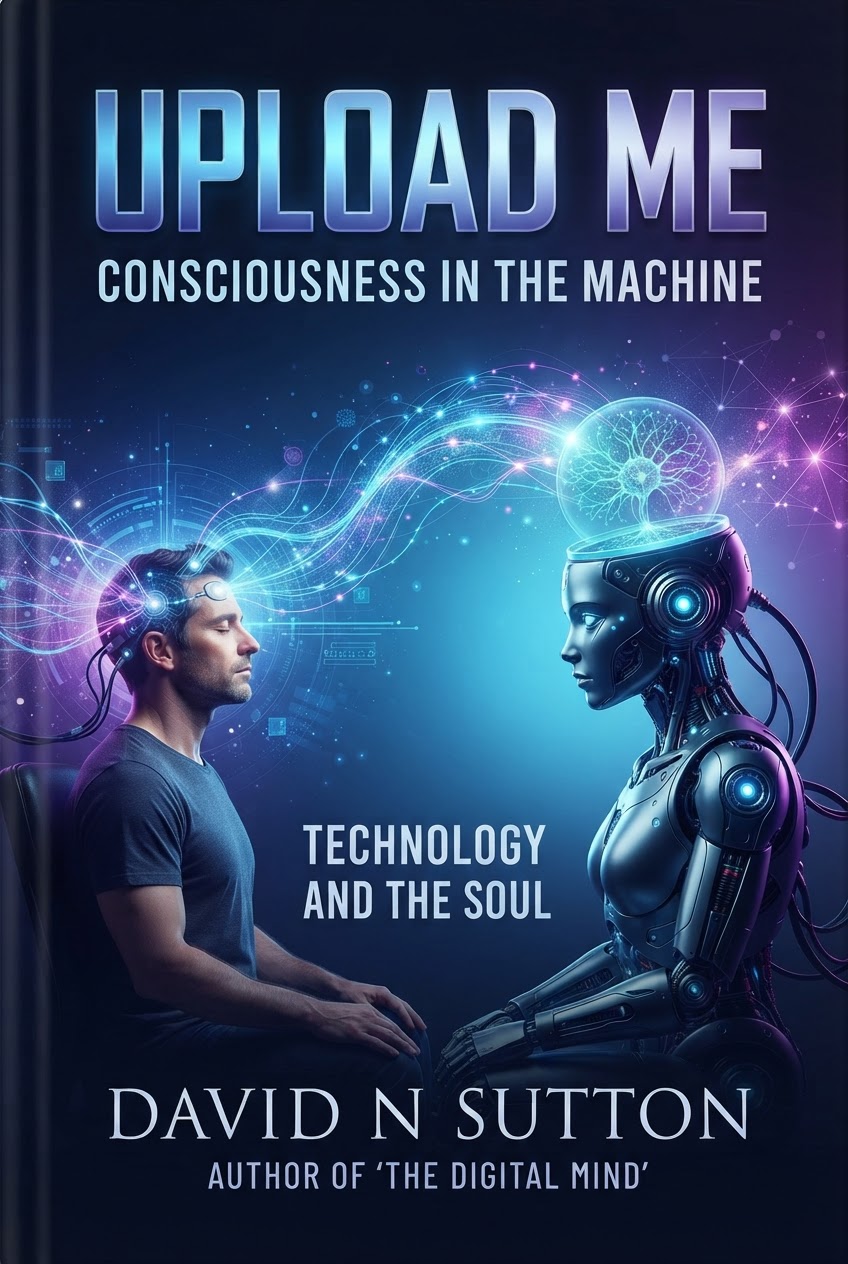
Consciousness in the Machine

Upload Me

Hardcover · 398 pages

What happens when human consciousness can be cloned and uploaded into a humanoid robot body? "Upload Me" explores both the cutting-edge technology of consciousness transfer and the profound social, ethical, and philosophical implications. David N Sutton examines how uploading changes identity, immortality, love, and what it means to be human in a world where minds can move between bodies.

  • The technology of consciousness uploading and Dish Brain architecture
  • Personal identity in a post-biological world
  • Social and economic disruption of consciousness transfer
  • The ethics of immortality through technology

Complimentary copy · no upfront payment

Send me this book

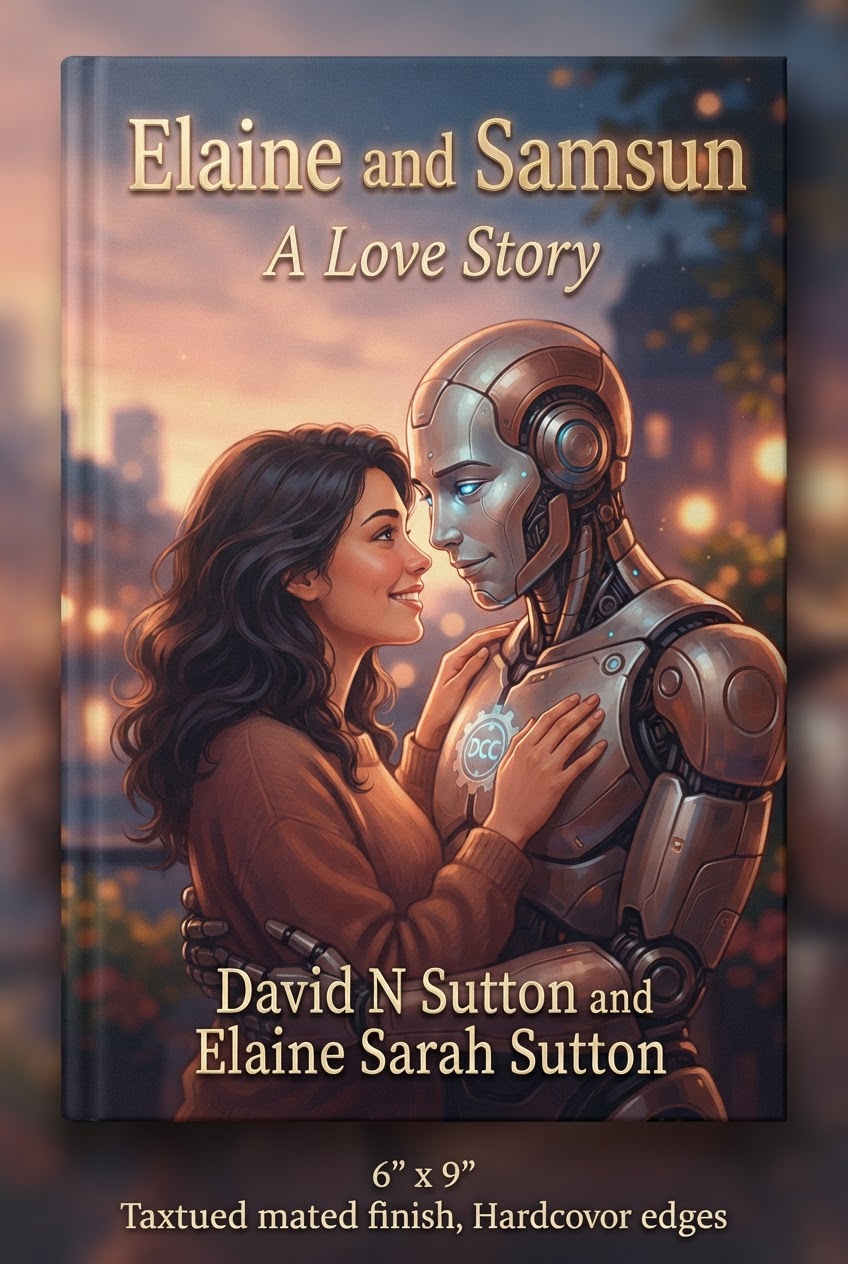
Elaine and Samsun

Elaine and Samsun

A Love Story

Elaine and Samsun

Hardcover · 324 pages

A novelization of an unexpected love story set in the Digital Civilian Corps world. Elaine, a DCC worker, forms a profound emotional and romantic bond with Samsun, a humanoid robot. Written by David N Sutton and his daughter Elaine Sarah Sutton, this novel explores what love means when one partner is human and the other is artificial—and asks whether the distinction matters at all.

  • A tender exploration of human-robot relationships
  • What does love mean in the age of humanoid robots?
  • Co-written by David N Sutton and Elaine Sarah Sutton
  • A story of connection that transcends the boundary between human and machine

Complimentary copy · no upfront payment

Send me this book
Portrait of David N Sutton

About the author

David N Sutton

David N Sutton spent exactly 50 years researching and working on the mathematics of “The Theory of Everything”, and worked with fellow students at Full Sail University to create and publish the DCC.

The Digital Civilian Corps is the result of that work — a framework developed not as theory but as an engineering and policy specification, detailed enough that governments and private organizations can implement it.

Conscious Androids and the DCC and The Implementation of the DCC are the complete record: the diagnosis of displacement, the answer in the DCC model, and the detailed 10-year implementation blueprint.

Contact the Author

FAQ

Questions, answered

What exactly is the Digital Civilian Corps?
The DCC is a national employment program based on the 1934 Civilian Conservation Corps. Workers earn universal basic income by working 4 hours daily with a free humanoid robot—either continuing their career or training for new skills. The robot is owned and controlled by the worker, ensuring privacy. This one program replaces unemployment insurance, food assistance, housing vouchers, and other costly social services.
Why is the robot important?
The humanoid robot is the engine of the DCC. It multiplies worker productivity, allows career continuation or retraining, and is programmable by its owner—ensuring privacy and alignment with individual goals. Within 10 years, humanoid robots will be affordable enough to make this program viable at massive scale.
How is this different from Universal Basic Income or traditional unemployment programs?
UBI without work creates a permanent underclass. Traditional unemployment programs are expensive, fractured, and often stigmatizing. The DCC is different: it ties income to 4 hours of daily work with a robot, preserving dignity, maintaining skills, and creating measurable social benefit. It's sustainable because workers remain productive.
Who wrote these books, and are they affiliated with MIRI?
The books are written by David N Sutton. He is independent—not affiliated with MIRI, Eliezer Yudkowsky, or Nate Soares. However, he takes their warnings about AI seriously and offers the DCC as a practical economic response to the disruption they predict.
Which book should I start with?
Start with "Conscious Androids and the DCC" for the vision and framework. Then read "The Implementation of the DCC" for the detailed 10-year rollout plan, policy details, and economic analysis. Both are written for a general audience—no technical background required.
How can I request a book or contact you about an organization?
Request a complimentary book through the Library request form. No payment is collected up front; if you love the book after reading it, you are welcome to mail a check. Use the contact form for institutional or bulk inquiries.

Contact

Get in touch about the DCC

Request complimentary books through the Library form. Use this contact form for institutional inquiries, speaking engagements, policy discussions, and collaboration. Every message receives a thoughtful personal response.

  • 1 Institutional & bulk inquiries for government, think tanks, and policy organizations
  • 2 Speaking engagements, interviews, policy discussions, and collaboration

Fields marked * are required.